-
Table of Contents

Decoding Human Behavior: Unveiling the Psychotype through Correspondence, Calls, Speech, and Photos.
Understanding the Role of Correspondence in Decoding Human Behavior
Decoding Human Behavior: Correspondence, Calls, Speech, Photos: Identifying a person’s psychotype
Understanding the Role of Correspondence in Decoding Human Behavior
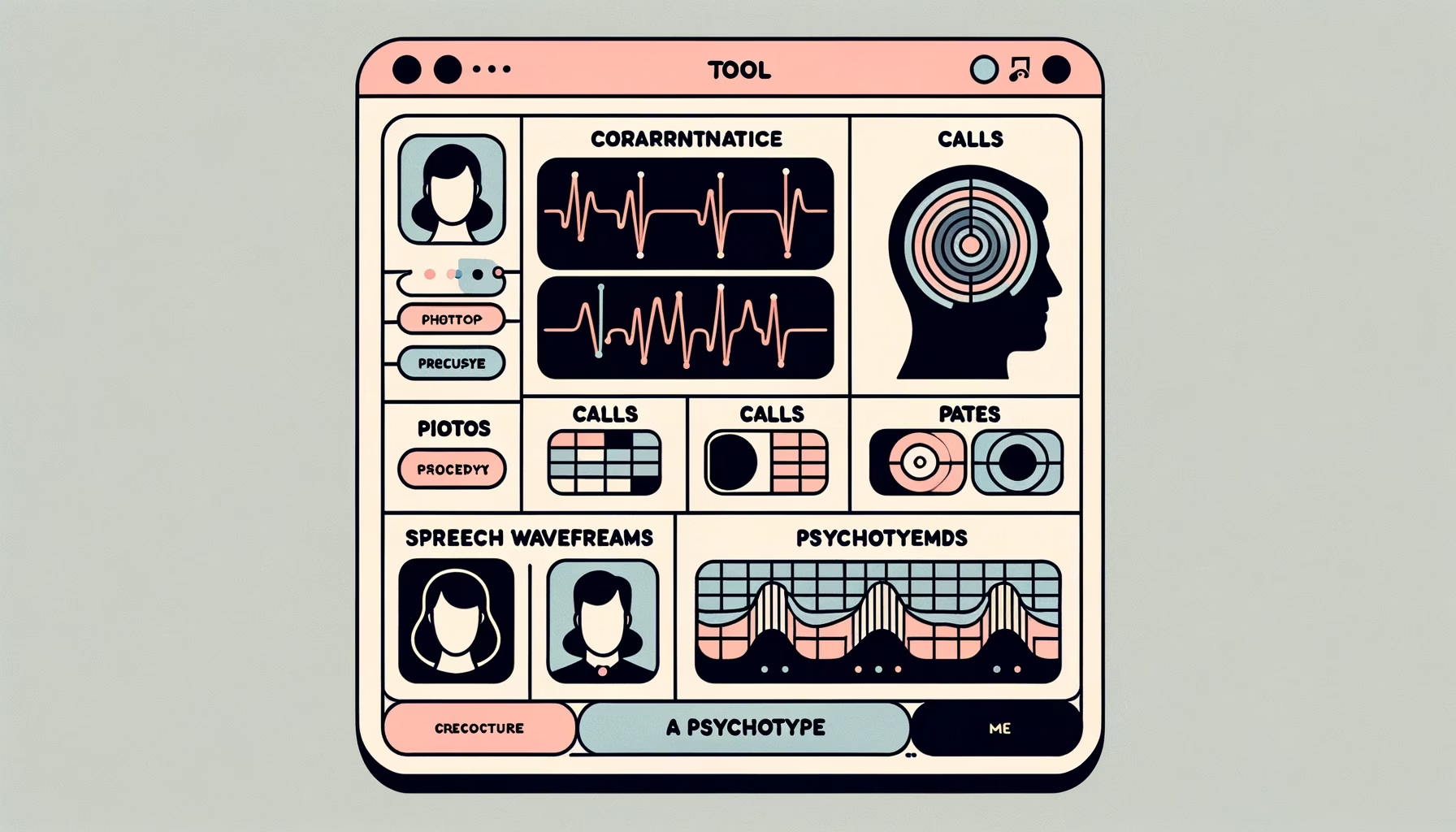
When it comes to understanding human behavior, there are various factors that come into play. One of the most significant aspects is correspondence – the way people communicate through written messages, phone calls, speech, and even photos. By analyzing these forms of communication, experts can gain valuable insights into a person’s psychotype, providing a deeper understanding of their thoughts, emotions, and motivations.
Correspondence, in all its forms, serves as a window into the human mind. It allows us to observe patterns, identify key traits, and decipher underlying meanings. By examining the words people choose, the tone they use, and the topics they discuss, we can begin to unravel the complexities of their personality.
Written correspondence, such as emails, text messages, and letters, offers a wealth of information. The choice of words, sentence structure, and punctuation can reveal a person’s level of education, intelligence, and emotional state. For example, someone who frequently uses complex vocabulary and precise grammar may be highly educated and detail-oriented. On the other hand, someone who uses informal language and abbreviations may be more laid-back and casual in their approach.
Furthermore, the content of written correspondence can provide valuable insights into a person’s interests, values, and beliefs. By analyzing the topics they discuss and the opinions they express, we can gain a deeper understanding of their worldview. For instance, someone who frequently discusses environmental issues and advocates for sustainable living likely values nature and has a strong sense of social responsibility.
Moving beyond written correspondence, phone calls offer another layer of understanding. The tone of voice, speed of speech, and choice of words can reveal a person’s emotional state and level of confidence. A confident and assertive tone may indicate a strong personality, while a hesitant and soft-spoken voice may suggest shyness or insecurity. By paying attention to these nuances, we can gain valuable insights into a person’s character.
Speech patterns can also provide clues about a person’s psychotype. For example, someone who speaks rapidly and interrupts others frequently may be more extroverted and impulsive. On the other hand, someone who speaks slowly and carefully, taking time to consider their words, may be more introverted and thoughtful. These observations can help us understand how individuals interact with others and navigate social situations.
In today’s digital age, photos have become an integral part of correspondence. Social media platforms are filled with images that people share, providing a visual representation of their lives. By analyzing these photos, we can gain insights into a person’s interests, hobbies, and social connections. For example, someone who frequently posts pictures of outdoor activities may be adventurous and enjoy nature. On the other hand, someone who shares photos of gatherings with friends and family may value relationships and social connections.
In conclusion, correspondence plays a crucial role in decoding human behavior. By analyzing written messages, phone calls, speech, and photos, experts can gain valuable insights into a person’s psychotype. The choice of words, tone of voice, and content of communication all provide clues about a person’s personality, interests, and values. By understanding these aspects, we can develop a deeper understanding of human behavior and enhance our interactions with others. So, the next time you engage in correspondence, remember that every word, every sentence, and every image can reveal more about who you are.
Q&A
Question: What is psychotype?
Answer: Psychotype refers to the classification or categorization of an individual’s psychological characteristics, traits, and behaviors.
Conclusion
In conclusion, decoding human behavior through various forms of communication such as correspondence, calls, speech, and photos can provide insights into a person’s psychotype. By analyzing patterns, language use, tone, and non-verbal cues, it becomes possible to identify certain characteristics and traits that contribute to understanding an individual’s psychological makeup. This understanding can be valuable in various fields, including psychology, marketing, and personal relationships.
