
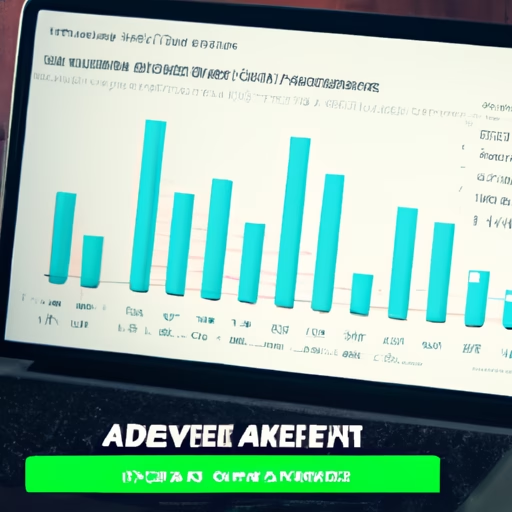
Unlock the power of Adsense Analytics to maximize your revenue potential.
Analyzing AdSense Dashboard: A Comprehensive Guide to Revenue Reports and Traffic Insights

Decoding AdSense Analytics: Understanding Your Revenue Streams
Analyzing AdSense Dashboard: A Comprehensive Guide to Revenue Reports and Traffic Insights
If you’re a website owner or a blogger who monetizes their content through Google AdSense, understanding your revenue streams is crucial. The AdSense dashboard provides a wealth of information that can help you optimize your ad performance and maximize your earnings. In this comprehensive guide, we’ll walk you through the various revenue reports and traffic insights available in the AdSense dashboard, helping you decode the analytics and make informed decisions.
First and foremost, let’s start with the Revenue Overview report. This report gives you a high-level view of your earnings, displaying your total revenue, RPM (revenue per thousand impressions), and the number of ad impressions served. It’s a great starting point to gauge your overall performance and track your progress over time. By comparing your RPM to industry benchmarks, you can assess whether your ad revenue is on par with similar websites in your niche.
Moving on to the Revenue by Ad Unit report, this section provides a breakdown of your earnings based on the specific ad units you have implemented on your website. By analyzing this report, you can identify which ad units are performing well and generating the most revenue. Armed with this knowledge, you can strategically place these high-performing ad units in prominent positions on your website to maximize their impact.
Next up, we have the Revenue by Page report. This report allows you to see how much revenue each page on your website is generating. By identifying the pages that are driving the most revenue, you can focus your efforts on optimizing those pages further. This could involve tweaking the ad placement, experimenting with different ad formats, or even improving the overall user experience on those pages to encourage more engagement and ad clicks.
Now, let’s delve into the Traffic Sources report. This report provides valuable insights into where your website traffic is coming from. By understanding which sources are driving the most traffic, you can tailor your content and ad strategy to cater to those specific audiences. For example, if you notice that a significant portion of your traffic is coming from social media platforms, you can create content that resonates with that audience and implement ad formats that are more likely to capture their attention.
Another important report to consider is the Ad Sizes report. This report shows you the performance of different ad sizes on your website. By analyzing this data, you can determine which ad sizes are generating the most revenue and optimize your ad placements accordingly. For instance, if you find that leaderboard ads are consistently outperforming other ad sizes, you can prioritize their placement on your website to increase visibility and click-through rates.
Lastly, let’s not forget about the Ad Types report. This report provides insights into the performance of different ad types, such as text ads, display ads, or native ads. By understanding which ad types are resonating with your audience and generating the most revenue, you can fine-tune your ad strategy and focus on the formats that are most effective for your website.
In conclusion, the AdSense dashboard offers a wealth of information that can help you understand your revenue streams and optimize your ad performance. By analyzing the various revenue reports and traffic insights available, you can make informed decisions to maximize your earnings. Remember to regularly monitor these reports, experiment with different strategies, and adapt to the ever-changing landscape of online advertising. With a confident understanding of your AdSense analytics, you can unlock the full potential of your website’s revenue streams.
Unveiling Ad Performance Metrics: Understanding User Demographics, Bounce Rate Analysis, and Pageviews vs. Earnings
Decoding AdSense Analytics: Understanding Your Revenue Streams
If you’re a website owner or a blogger who monetizes their content through Google AdSense, understanding your revenue streams is crucial to maximizing your earnings. AdSense provides a wealth of analytics and performance metrics that can help you gain insights into your ad performance and make informed decisions to optimize your revenue. In this article, we will delve into three key aspects of AdSense analytics: understanding user demographics, analyzing bounce rates, and deciphering the relationship between pageviews and earnings.
Understanding User Demographics
One of the most valuable pieces of information that AdSense provides is user demographics. By knowing who your audience is, you can tailor your content and ads to better suit their preferences and increase engagement. AdSense offers detailed insights into the age, gender, and location of your visitors, allowing you to create targeted campaigns that resonate with your audience.
For example, if you discover that a significant portion of your audience consists of young adults, you can focus on creating content that appeals to their interests and preferences. Additionally, you can adjust your ad placements and formats to align with the browsing habits of your specific demographic, increasing the likelihood of clicks and conversions.
Analyzing Bounce Rate
Bounce rate refers to the percentage of visitors who leave your website after viewing only one page. A high bounce rate can indicate that your content or ads are not engaging enough to keep visitors on your site. AdSense provides valuable insights into bounce rates, allowing you to identify areas for improvement and take action to reduce bounce rates.
By analyzing the pages with the highest bounce rates, you can identify potential issues such as slow loading times, irrelevant content, or intrusive ads. Addressing these issues can significantly improve user experience and increase the chances of visitors exploring more of your content or clicking on ads. Experimenting with different ad placements, formats, and content strategies can help you find the right balance that keeps visitors engaged and reduces bounce rates.
Deciphering Pageviews vs. Earnings
Pageviews and earnings are two essential metrics that AdSense provides, and understanding their relationship is crucial for optimizing your revenue streams. While it may seem logical to assume that more pageviews automatically translate into higher earnings, this is not always the case.
The key factor to consider is the click-through rate (CTR) of your ads. A high number of pageviews can be beneficial, but if your CTR is low, your earnings may not reflect the increased traffic. On the other hand, a lower number of pageviews with a higher CTR can result in higher earnings.
To strike the right balance, it’s essential to focus on both increasing your pageviews and optimizing your ad placements and formats to encourage clicks. Experimenting with different ad sizes, positions, and colors can help you find the sweet spot that maximizes both pageviews and earnings.
In conclusion, understanding your revenue streams through AdSense analytics is crucial for website owners and bloggers looking to optimize their earnings. By delving into user demographics, analyzing bounce rates, and deciphering the relationship between pageviews and earnings, you can make informed decisions to improve your ad performance and increase your revenue. Remember, it’s a continuous process of experimentation and refinement, so don’t be afraid to try new strategies and adapt to the ever-changing digital landscape.

